
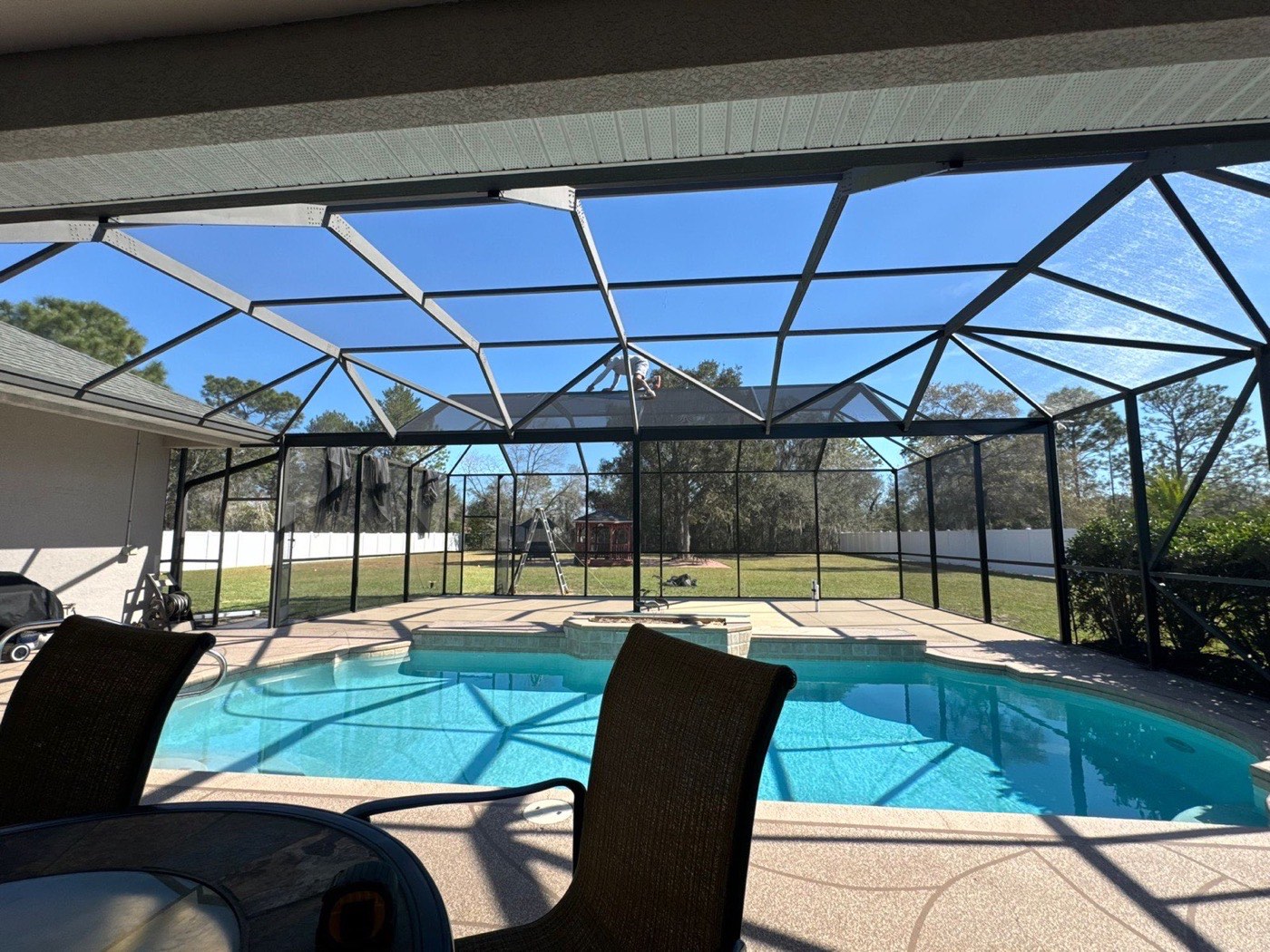
Algae growth on pool screens is a widespread challenge, especially in humid climates where conditions are ripe for such infestations. This unsightly problem not only mars the aesthetic appeal of your pool area but can also lead to the degradation of the screen material itself over time.
Algae, if left unchecked, can cause the screens to weaken and tear, necessitating costly repairs or replacements. Thus, it’s crucial to not only understand the effective methods for removing algae but also to be proactive in preventing its growth.
This comprehensive guide is designed to arm you with the necessary knowledge and tools on effective way on eradicating algae from pool screens. Packed with detailed steps and practical tips, it will navigate you through identifying the type of algae present, selecting the most suitable cleaning solutions, and applying them in the most effective manner.
Additionally, it emphasizes the importance of regular maintenance and the adoption of preventive strategies to ensure that algae do not become a recurrent issue.
Understanding Algae Growth on Pool Screens
Before diving into the removal process, it’s essential to understand why algae tends to grow on pool screens. Algae are plant-like organisms that thrive in moist, warm environments, making pool screens in humid climates a perfect breeding ground. They can be brought in by wind, rain, or even contaminated pool tools and toys. Understanding the type of algae you are dealing with is also crucial, as different types require different removal methods.
Types of Algae on Pool Screens
- Green Algae: The most common type. It can be easy to remove.
- Black Algae: These are more challenging to remove and often require stronger solutions.
- Yellow or Mustard Algae: Rare on screens but can be stubborn.
How to eradicate algae from your pool screens
1. Regular Inspection and Maintenance
The first step in algae removal is prevention. Regularly inspecting your pool screen for early signs of algae growth is crucial. Look for small patches of green, black, or yellow discoloration. Early detection makes removal easier and less time-consuming. Establishing a routine inspection schedule can greatly reduce the risk of algae becoming a significant problem.
2. Cleaning Solutions for Algae Removal
There are several cleaning solutions effective in removing algae, each suited for different types of algae and screen materials:
- Bleach Solution: Effective for killing most algae types. Use caution as bleach can be harsh.
- Vinegar Solution: A natural approach, better for the environment and less harsh on screens.
- Commercial Algae Removers: Designed for algae removal, safe for most screen materials.
3. The Cleaning Process
The cleaning process involves several steps to ensure effective algae removal:
- Safety First: Always prioritize safety by wearing protective gear.
- Application: Apply the cleaning solution evenly and generously.
- Let it Sit: Allowing the solution to penetrate the algae is crucial.
- Scrubbing: Gentle scrubbing is key to avoid screen damage.
- Rinsing: Thorough rinsing is essential to remove all traces of the cleaning solution.
- Repeat if Necessary: Stubborn algae might require multiple cleaning sessions.
4. Drying and Inspection
After cleaning and rinsing, inspect the screen for any remaining algae spots. Ensuring the screen is completely dry before inspection is important for spotting any missed areas.
5. Preventive Measures
To prevent future algae growth, consider the following measures:
- Improve Air Circulation: Good air circulation can significantly reduce algae growth.
- Reduce Moisture: Keeping the area dry is essential in preventing algae.
- Regular Cleaning: Establish a routine cleaning schedule for your pool screen.
- Use Algaecide in the Pool: This helps prevent algae spores from reaching the screens.
6. Professional Cleaning Services
For extensive algae growth or hard-to-reach areas, professional cleaning services can be a more effective solution. They have specialized equipment and solutions that can safely and efficiently clean pool screens.
7. When to Replace the Screen
Sometimes, cleaning might not be enough, especially if the screen is old or heavily damaged by algae. In such cases, replacing the screen might be a more cost-effective solution in the long run.
8. DIY Cleaning Tools and Techniques
For those who prefer a DIY approach, there are several tools and techniques that can be effective:
- Pressure Washer: A low setting can be used for gentle yet effective cleaning.
- Soft Brushes: Ideal for scrubbing without damaging the screen.
- Homemade Solutions: Mixing household items like dish soap and baking soda can create effective, less harsh cleaning solutions.
9. Long-Term Care and Maintenance
Long-term care involves more than just cleaning; it’s about maintaining the integrity of the pool screen:
- Regular Check-Ups: Inspect for tears or damages that can lead to algae issues.
- Proper Storage of Pool Tools: Ensure pool tools and toys are clean and dry before storing.
- Seasonal Maintenance: Adjust your maintenance routine based on the season, as different weather conditions can affect algae growth.
10. Educating Yourself and Staying Informed
Stay informed about new cleaning products and techniques:
- Attend Pool Maintenance Workshops: Local workshops can offer valuable tips.
- Read Pool Maintenance Blogs and Articles: Keep up with the latest in pool care.
- Join Online Forums: Engage with other pool owners to share experiences and advice.
Conclusion
Algae growth on pool screens, while frustrating, can be effectively managed with the correct strategy. It’s essential to first understand the specific type of algae you’re dealing with, as each variety requires a tailored approach for removal. Choosing the right cleaning solutions is equally important; whether you opt for natural remedies like vinegar or stronger commercial products, the choice should be based on the algae’s severity and your screen’s material.
Beyond just removal, preventative measures are key in sustaining a clean pool environment. Regular cleaning, maintaining proper pool chemistry, and managing environmental factors like moisture and air circulation are all crucial. Each step, from identifying to preventing algae, plays a significant role in keeping your pool area pristine.
Ultimately, the aim is to create a space that’s not only algae-free but also enjoyable, clean, and safe for your family. A well-maintained pool screen is integral to ensuring your pool remains a place of leisure and comfort.